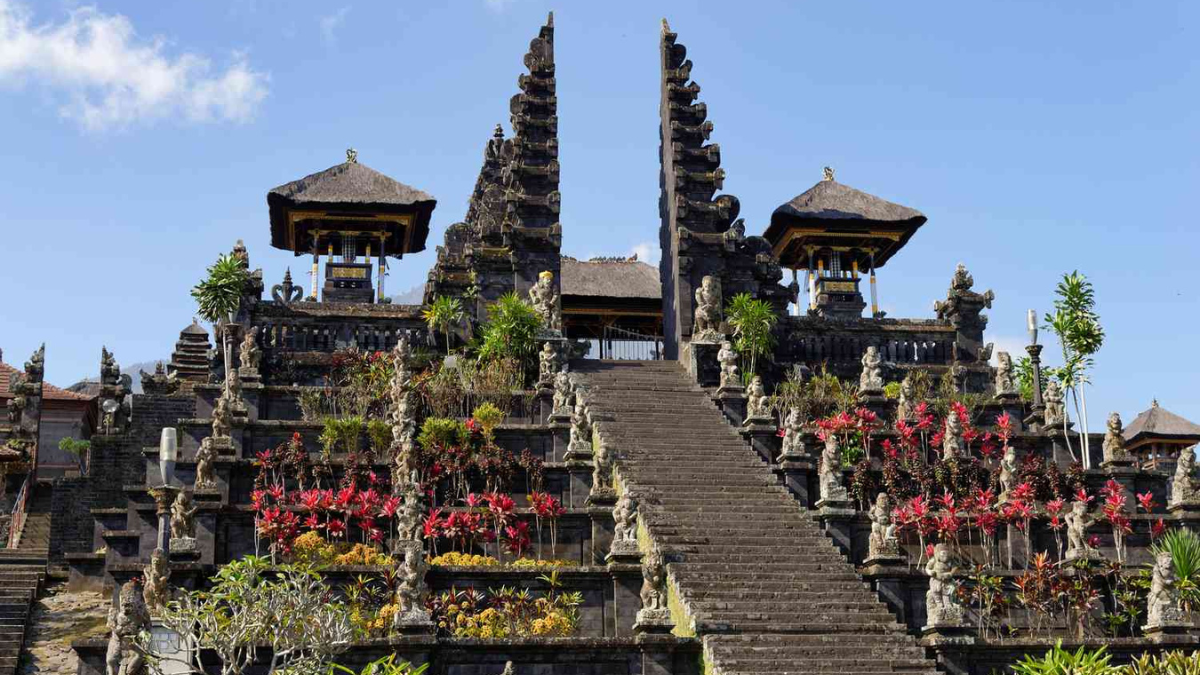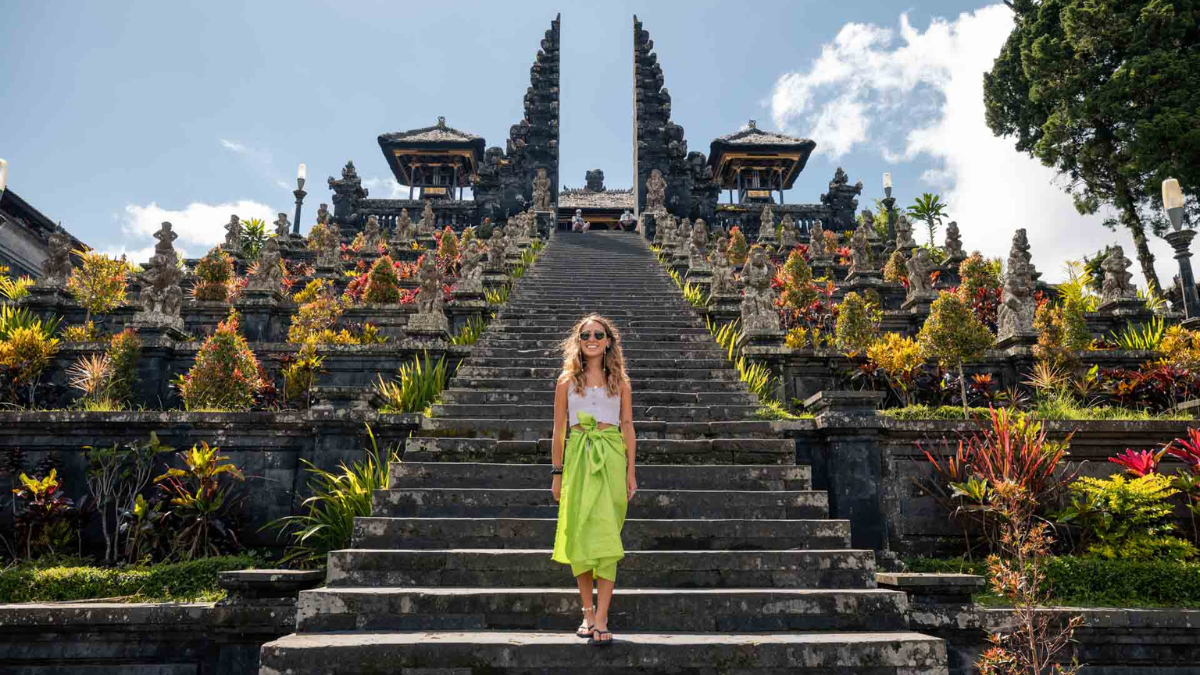
Besakih Mother Temple
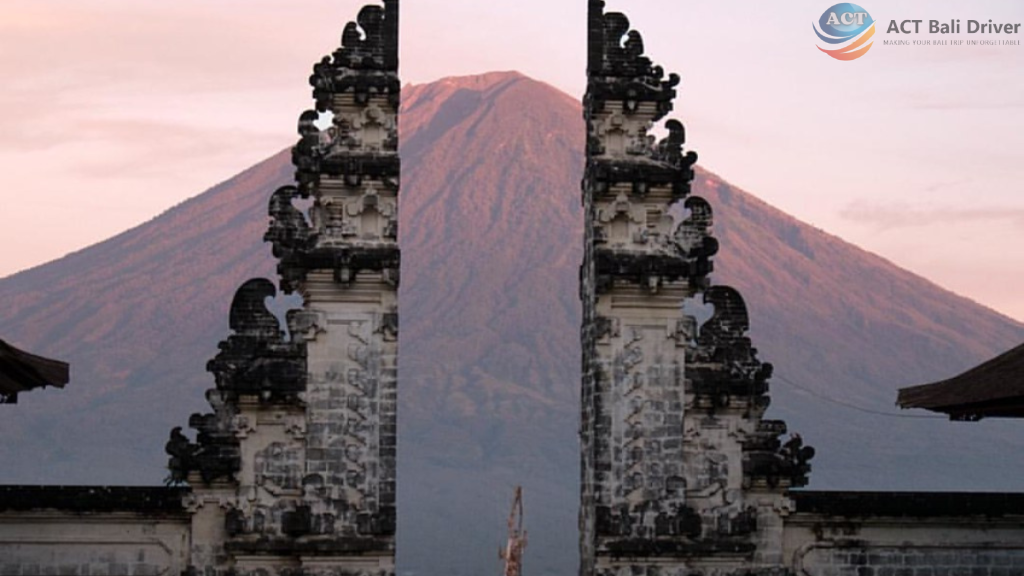
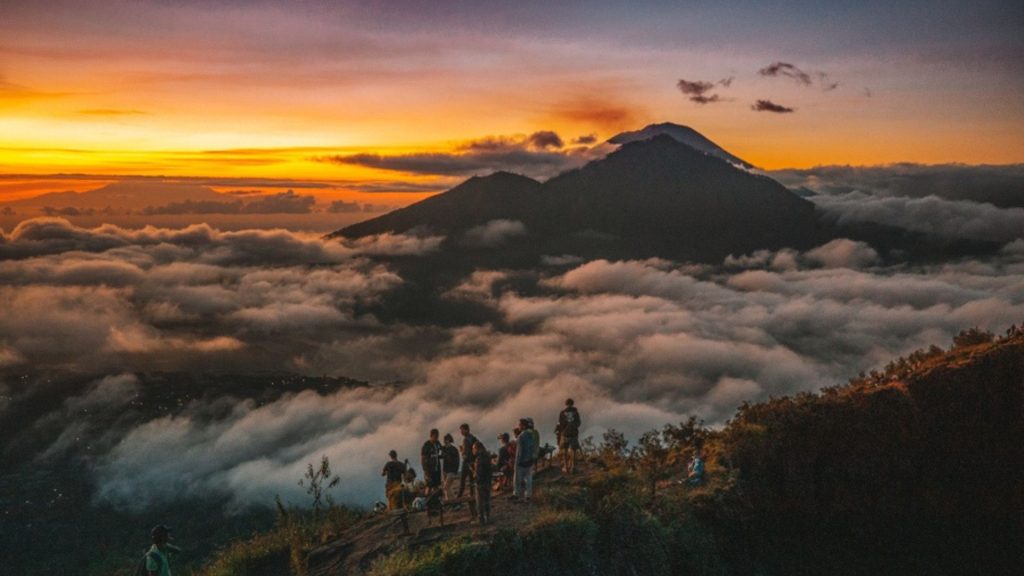
Long ago, when the gods walked among mortals, the island of Bali was a land of sacred mountains, lush forests, and flowing rivers. Mount Agung, the tallest and most revered of all, was believed to be the navel of the world—a place where the heavens and earth were eternally connected.
At the foot of this mighty mountain lay a village named Besakih. The villagers lived simple lives, tending their rice fields and offering prayers to the gods. But Mount Agung was no ordinary mountain; it was a sacred home of the divine. It was said that those with pure hearts could hear the whispers of the gods through the rustling wind and flowing streams.
One day, a great sage named Rsi Markandeya traveled to Bali from Java. He was a man of deep wisdom and spiritual power, guided by visions from the gods. As he journeyed through the island, he felt the pull of Mount Agung and climbed its slopes to meditate.
While meditating, Rsi Markandeya was blessed with a revelation. The gods commanded him to establish a temple on the mountain, a sanctuary where all could worship and find a connection to the divine. He descended from the mountain and told the villagers of Besakih about his vision.
“Here,” he said, pointing to a sacred clearing, “we shall build a temple. It will be a place of unity, where all beings—humans, spirits, and gods—will gather in harmony.”
The villagers, inspired by the sage’s words, offered their help. They gathered stones, carved intricate statues, and built shrines dedicated to the gods of the Balinese Hindu pantheon. The first temple built was called Pura Basukian, named after the great serpent Basuki, a guardian spirit believed to protect the mountain and its people.
spiritual heart of Bali
As generations passed, the temple complex grew. More shrines were added, each dedicated to different deities, and Besakih became the spiritual heart of Bali. Pilgrims came from across the island to offer prayers and seek blessings. The temple, perched high on the slopes of Mount Agung, seemed to touch the sky, a reminder of the connection between the mortal and divine realms.
But Mount Agung, though sacred, was also powerful and unpredictable. It would erupt from time to time, spewing fire and ash. The people of Besakih believed these eruptions were a sign of the gods’ displeasure, and they offered elaborate ceremonies to restore balance and harmony.
One of the most miraculous stories occurred during the eruption of Mount Agung in 1963. Lava flowed dangerously close to the temple complex, but it suddenly stopped just meters away from the shrines, sparing them. The villagers saw this as a divine sign that Besakih was truly blessed and protected by the gods.
Today, Besakih Temple, often called the Mother Temple of Bali, stands as a symbol of spiritual devotion and resilience. It is a sprawling complex of 23 temples, each with its own purpose and beauty, set against the breathtaking backdrop of Mount Agung. The temple continues to be a sacred site where Balinese Hindus perform elaborate rituals, celebrating life, honoring the gods, and seeking protection for generations to come.
And so, the story of Besakih lives on, a tale of faith, harmony, and the enduring bond between the people of Bali and their sacred mountain. Visitors from around the world climb its steps, drawn not only by its beauty but also by the timeless spirit of devotion that fills the air.
For Recommendations Visit and Follow Us On Instagram
Besakih Mother Temple
Several Choices of Bali tourist destination
Discover Ubud: Tailored Private Tour Experience
Nature and Culture: Private Tour of Tanah Lot & Waterfall
East Nusa Penida Trip All inclusive